
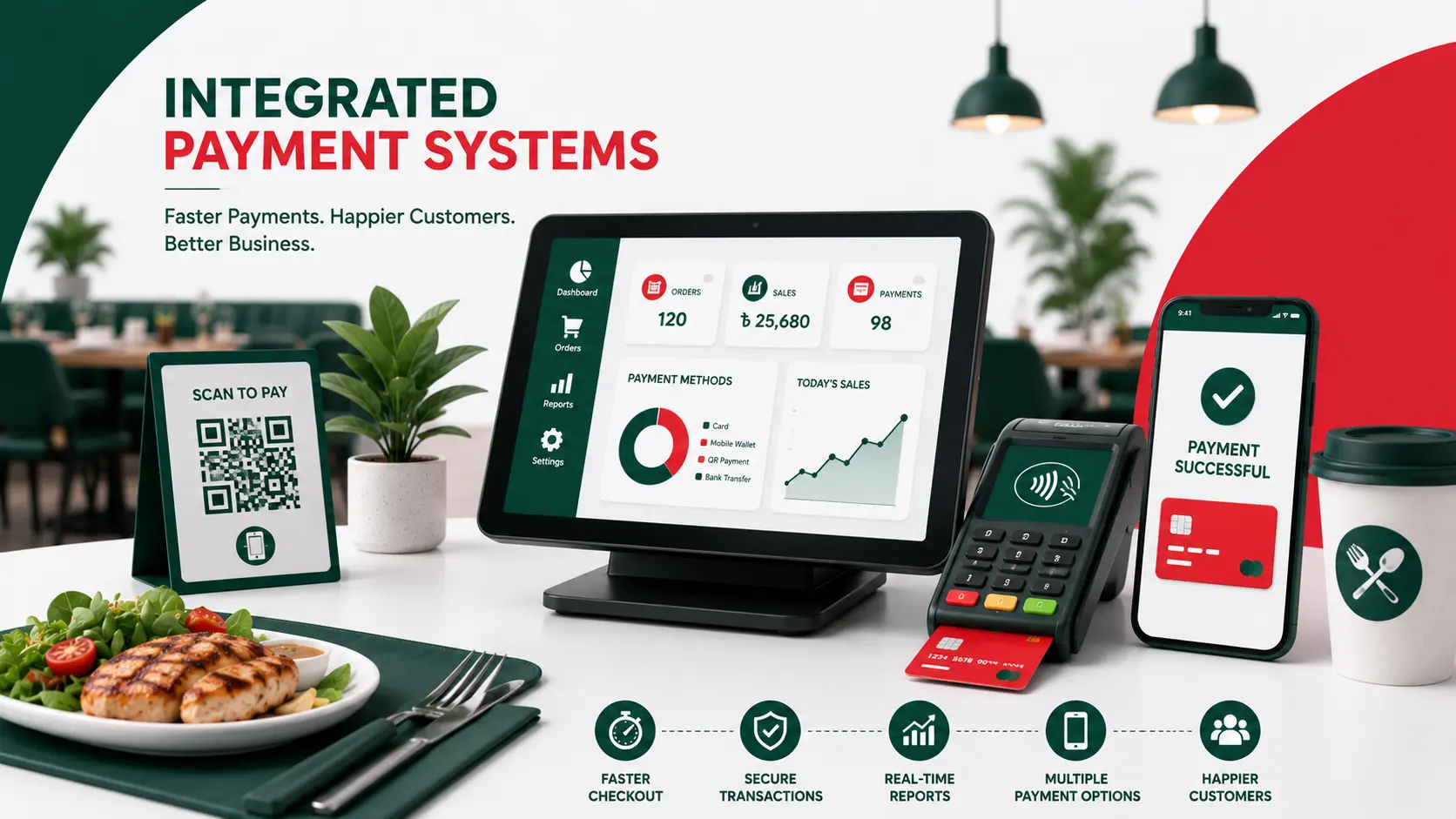
The restaurant business depends on speed, accuracy, and customer satisfaction. From taking orders to accepting payments, every step affects the overall dining experience. Customers no longer want to wait in long billing queues or deal with limited payment options. They expect fast, secure, and flexible payment methods.
Restaurants that still rely on disconnected billing systems often face payment delays, reconciliation issues, manual reporting, and accounting errors. These problems increase staff workload and can affect customer satisfaction.
Businesses looking for a reliable online payment gateway in Bangladesh are increasingly adopting integrated payment solutions that connect billing, payment collection, and financial reporting into one platform. This approach helps restaurant owners manage daily operations with greater control while providing a better payment experience for customers.
Restaurants looking for restaurant payment gateway solutions in Bangladesh can connect POS systems, online ordering platforms, QR payments, mobile banking, and accounting into one payment workflow. Instead of managing multiple disconnected systems, restaurant owners can monitor every transaction from a single dashboard.
What Is an Integrated Payment System?
An integrated payment system connects your restaurant's billing software, POS system, online ordering platform, delivery service, accounting software, and payment gateway.
Rather than entering payment information manually into multiple systems, every transaction is automatically recorded.
For example:
- Customer places an order
- Bill is generated
- Customer pays
- Payment is confirmed instantly
- Sales report updates automatically
- Inventory adjusts accordingly
- Accounting records are updated
Everything happens without repeated manual entry.
Why Traditional Restaurant Payment Methods Create Problems
Many restaurants still operate with separate systems.
The POS records sales.
The accountant records payments later.
Bank statements arrive separately.
Delivery platforms maintain different reports.
Managers compare everything manually at the end of the day.
This process increases the chance of:
- Missing transactions
- Duplicate entries
- Cash shortages
- Settlement delays
- Reporting mistakes
Industry studies suggest that restaurants using manual reconciliation spend 25–35% more administrative time on daily financial management compared with restaurants using connected payment systems.
Customers Expect Faster Payment Experiences
Customer expectations have changed dramatically.
Many people now expect to pay using:
- Mobile banking
- Debit cards
- Credit cards
- QR payments
- Internet banking
- Digital wallets
Waiting several minutes simply to complete payment creates frustration.
Restaurants offering multiple payment choices often report higher customer satisfaction because customers can choose the method they already use every day.
Supporting various online payment methods in Bangladesh also helps restaurants serve tourists, business travelers, families, and younger customers who rarely carry cash.
Faster Table Turnover
Every restaurant wants to serve more customers during busy hours.
Payment delays slow table turnover.
When billing takes several minutes, new customers wait longer for available seating.
Integrated payment systems shorten the payment process by allowing customers to complete payments almost immediately.
Even reducing payment time by two or three minutes per table can create noticeable improvements during lunch and dinner rush hours.
Better Accuracy in Financial Reporting
Restaurant owners depend on accurate reports.
Integrated payment systems automatically record:
- Daily sales
- Refunds
- Discounts
- Taxes
- Tips
- Service charges
- Payment methods
This reduces manual calculations and provides management with clearer financial data.
Instead of waiting until the next day, owners can review sales performance in real time.
Easier Staff Management
Restaurant staff already handle multiple responsibilities.
Adding manual payment recording increases pressure during busy periods.
Integrated systems reduce repetitive administrative work.
Staff can spend more time serving customers rather than correcting billing mistakes.
Managers also spend less time reviewing payment discrepancies.
Reduced Cash Handling
Cash transactions remain common, but excessive cash handling increases operational risks.
Restaurants managing mostly cash payments often experience:
- Counting errors
- Missing cash
- Deposit delays
- Security concerns
Offering digital payment options helps reduce cash dependency.
Many restaurants have reported lower reconciliation errors after encouraging customers to use electronic payments.
Better Online Ordering Experience
Food delivery continues to grow every year.
Customers ordering online expect payment to be completed within seconds.
If payment fails or becomes complicated, many customers abandon the order.
Integrated payment systems connect directly with restaurant websites and food ordering platforms, creating a smoother checkout process.
Restaurants using an easy payment system in Bangladesh often experience fewer abandoned orders because customers encounter fewer payment obstacles.
Faster Payment Confirmation
Customers appreciate immediate confirmation after making payments.
Integrated payment systems instantly notify:
- Customer
- Restaurant staff
- Kitchen
- Accounting department
This reduces confusion about whether payment was successful.
It also helps delivery teams dispatch orders more quickly.
Better Security for Restaurant Transactions
Restaurants process hundreds or thousands of transactions every month.
Protecting customer payment information is critical.
Modern payment gateways include:
- Data encryption
- Fraud monitoring
- Secure authentication
- Tokenized payment processing
- Transaction verification
Working with a trusted payment gateway service provider in Bangladesh helps restaurants reduce payment-related security risks while maintaining customer confidence.
Support for Multiple Restaurant Locations
Restaurant chains often struggle to monitor payments across multiple branches.
Integrated systems centralize reporting.
Owners can compare:
- Sales by branch
- Payment methods
- Revenue trends
- Refund reports
- Daily settlements
This provides better visibility without collecting reports from every location individually.
Better Customer Loyalty Programs
Many restaurants operate loyalty programs.
Customers earn points after every purchase.
Integrated payment systems automatically connect purchases with loyalty accounts.
Customers receive rewards without additional manual processing.
This creates a smoother customer experience while reducing administrative work.
Easier Refund Management
Refunds occasionally happen because of order cancellations or billing mistakes.
Manual refund processes often take longer and increase accounting complexity.
Integrated systems record refunds automatically.
Managers can quickly verify refund history while customers receive faster confirmation.
Useful Business Insights
Payment systems generate useful business data.
Restaurant owners can identify:
- Peak business hours
- Average order value
- Most popular payment methods
- Returning customers
- Sales trends
According to industry estimates, restaurants that regularly review payment analytics often identify operational improvements that increase monthly revenue between 8% and 15% over time.
International Customer Support
Many restaurants serve tourists, expatriates, and international business travelers.
Supporting an international payment gateway in Bangladesh allows businesses to accept payments from international cards with greater convenience.
This improves customer experience while reducing payment limitations for foreign visitors.
Choosing the Right Payment Partner
Restaurants should evaluate several factors before selecting a payment provider.
Consider:
- Payment security
- Settlement speed
- Multiple payment options
- POS integration
- Online ordering compatibility
- Reporting dashboard
- API availability
- Customer support
- Pricing transparency
Many restaurant owners search for the best payment gateway Bangladesh because reliable payment processing directly affects customer satisfaction and daily operations.
How EPS Bangladesh Supports Restaurants?
EPS Bangladesh provides payment solutions designed for restaurants of all sizes.
Businesses can connect their billing system with secure payment processing while managing transactions through a centralized dashboard.
The platform supports:
- POS integration
- QR payments
- Mobile banking
- Card payments
- Internet banking
- Online ordering integration
- Instant payment confirmation
- Reporting dashboard
- API integration
Restaurants using EPS spend less time managing payment records and more time serving customers.
Final Thoughts
Restaurant success depends on much more than food quality. Customers also expect fast service, flexible payment options, and accurate billing.
Integrated payment systems help restaurants reduce manual work, improve payment accuracy, shorten checkout time, and provide better visibility into daily operations. They also create a smoother experience for customers while helping management monitor business performance more effectively.
As customer expectations continue to evolve, restaurants that invest in connected payment technology are better prepared to manage growing transaction volumes and maintain consistent service quality.