
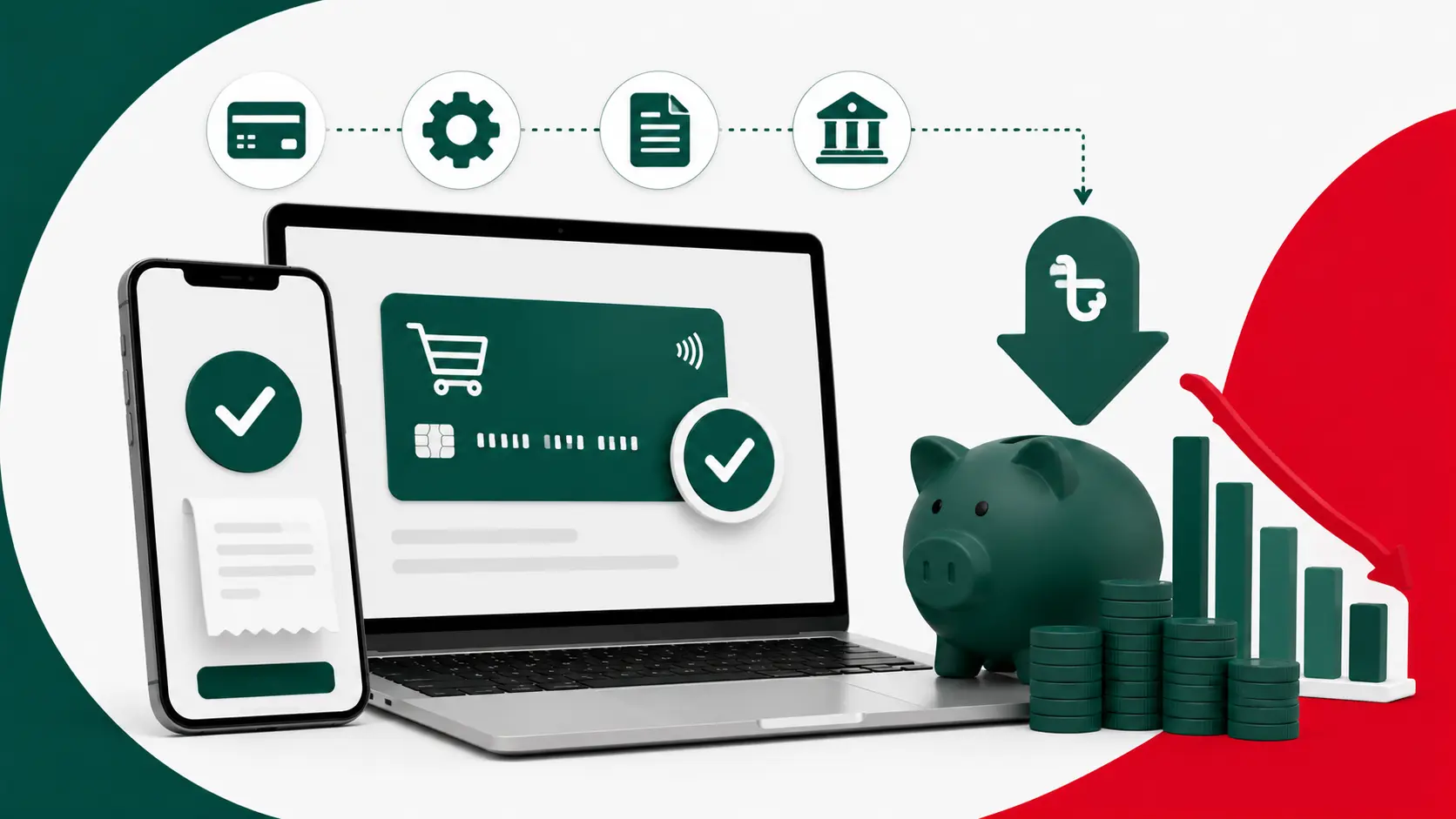
Businesses often look at payment processing as a way to collect money from customers, but the cost of handling payments goes far beyond transaction fees. Staff time, manual data entry, payment follow-ups, reconciliation, refunds, reporting, and error correction can all add to operating expenses. A well-planned online payment gateway in Bangladesh can reduce much of this repetitive work by connecting payment collection with records and business processes.
Payment automation becomes particularly useful when transaction volumes increase. A company processing 500 payments a month may manage them manually without much difficulty. At 5,000 or 20,000 payments, the same process can require several employees and many hours of repetitive checking. Automation changes how these tasks are handled by allowing payment information to move through predefined processes.
Businesses considering a payment gateway service provider in Bangladesh should therefore look beyond transaction charges. The wider cost of payment management includes staff workload, failed transactions, reconciliation time, customer support, reporting, and technology maintenance. A payment system that reduces unnecessary manual tasks can have a direct effect on operating costs.
What Is Digital Payment Automation?
Digital payment automation means using software and payment technology to handle routine payment-related activities with limited manual intervention.
Depending on the business, automation may cover:
- Payment collection
- Payment confirmation
- Transaction recording
- Customer notifications
- Invoice payment
- Payment links
- QR payments
- Refund processing
- Settlement tracking
- Transaction reconciliation
- Financial reporting
- API-based data exchange
The goal is not to remove people from the payment process. Instead, it is to reduce repetitive work so employees can spend more time on tasks that require human judgment.
Where Do Payment Costs Come From?
Many businesses focus on the fee charged for each transaction. That is only one part of the total cost.
Consider a company processing 8,000 transactions every month. If an employee spends an average of 20 seconds checking or recording each payment, that adds up to around 44 hours of work every month.
At a broader level, payment-related costs may come from:
- Manual transaction entry
- Reconciliation work
- Payment follow-ups
- Customer support
- Refund administration
- Error correction
- Report preparation
- Multiple software subscriptions
- Technical maintenance
- Failed or incomplete transactions
Automation can address several of these areas at the same time.
1. Less Manual Data Entry
Manual payment recording is one of the simplest areas where automation can reduce workload.
When customers pay online, transaction information can be captured electronically. Staff do not need to copy every payment reference, amount, and date into another spreadsheet.
For example, suppose a finance employee spends three hours each day entering payment records. Over 22 working days, that equals approximately 66 hours per month.
If an automated process cuts that workload by 50%, the business could recover around 33 staff hours each month.
The exact saving depends on transaction volume and the existing workflow, but the principle is straightforward: fewer repetitive entries mean fewer working hours spent on routine payment administration.
2. Faster Payment Reconciliation
Reconciliation involves checking whether payment records match sales, invoices, orders, and bank settlements.
When payment data is available in a structured format, finance teams can identify transactions more quickly.
A business receiving payments from several channels may otherwise need to compare separate reports.
Automation can help match information such as:
- Order ID
- Invoice number
- Transaction reference
- Payment amount
- Customer details
- Payment date
- Settlement status
Suppose a company spends 60 hours per month on reconciliation. If better payment data cuts the workload by one-third, around 20 hours could be saved each month.
That time can be used for financial review and other accounting tasks.
3. Fewer Payment Errors
Manual entry creates opportunities for mistakes.
A payment amount can be entered incorrectly. A transaction reference can be copied into the wrong row. A payment can be marked as pending even after confirmation.
Each mistake requires additional work.
An automated payment process can transfer transaction information directly from the payment system to another connected application. This reduces the number of times employees need to type the same information.
Fewer errors can also reduce customer service requests because staff can find clearer transaction records when customers ask about their payment status.
4. Lower Customer Support Workload
Payment questions can consume a surprising amount of staff time.
Customers may ask:
- Did my payment go through?
- Why is my order still pending?
- Has my refund been processed?
- When will my payment be confirmed?
- Did you receive my invoice payment?
Automated notifications can answer many of these questions before the customer contacts support.
A confirmation message after a successful payment gives the customer a record of the transaction. Status updates can also reduce uncertainty when a payment is pending or a refund is being processed.
If a company receives 1,000 payment-related questions each month and automation reduces those requests by even 15%, that means 150 fewer support cases to handle.
5. Better Handling of Payment Failures
Failed payments can create both lost sales and extra administrative work.
A customer may attempt a transaction, receive an error, and contact the business for help. Staff then need to check the transaction status and explain what happened.
Payment automation can provide clearer transaction statuses and notifications.
Businesses can also create processes for following up on failed payments, such as sending customers a payment request or directing them toward another supported payment option.
This is particularly useful for businesses that depend on recurring collections, online orders, membership fees, tuition, subscriptions, or service payments.
6. Automated Payment Links Reduce Collection Work
Payment links can reduce the number of manual steps involved in collecting money.
Instead of asking customers to visit a website, locate an invoice, and select a payment method, a business can send a payment request directly.
This can work well for:
- Consultancy firms
- Clinics
- Educational institutions
- Restaurants
- Retail businesses
- Service companies
- Professional firms
When payment status is recorded automatically, employees do not need to repeatedly ask whether a customer has paid.
7. QR Payments Can Reduce Counter Work
QR payments can also form part of an automated collection process.
A restaurant, shop, clinic, or service outlet can display a QR code for customers to scan. Once payment is completed, transaction information can be recorded through the payment system.
This can reduce dependence on manual receipt preparation and payment confirmation.
For businesses with high daily transaction volumes, even a few seconds saved per payment can add up over a month.
8. Centralized Reporting Reduces Administrative Time
Reporting can become difficult when businesses use several disconnected payment tools.
Finance teams may have to download reports from different systems and combine them manually.
A centralized payment environment can provide information about:
- Total collections
- Payment channels
- Failed transactions
- Refunds
- Settlement records
- Transaction dates
- Branch or outlet activity
This makes routine reporting less dependent on spreadsheets.
Businesses searching for the best payment gateway Bangladesh should therefore examine the reporting system as closely as the payment methods and transaction charges.
9. Supporting Different Payment Methods
Customers may prefer different ways to pay.
A business may need cards, bank payments, QR payments, mobile-based payments, payment links, or recurring billing.
Offering suitable online payment methods in Bangladesh can reduce the number of customers who abandon a payment because their preferred option is unavailable.
For the business, bringing several payment channels under one system can also reduce the need to maintain separate processes.
10. Automation Helps Growing Businesses Handle More Transactions
Business growth often brings more payments, more customers, and more records.
A manual system that works for 1,000 monthly transactions may become difficult when the volume reaches 10,000.
Automation lets businesses handle a larger number of routine transactions without increasing administrative work at the same rate.
For example, if payment volume increases by 50% but the finance team's manual workload increases by only 10% because more processes are automated, the business can handle additional activity without adding the same number of administrative hours.
This does not mean automation removes all human involvement. Exceptions, disputes, refunds, unusual transactions, and financial decisions still require staff attention.
Digital Payments Can Lower Software and Administration Costs
Using multiple payment tools can create another type of expense.
A company may pay for separate systems for:
- Online checkout
- Payment links
- QR collection
- Reporting
- Invoice payments
- Reconciliation
- Customer notifications
Where suitable, a broader payment platform can bring several functions under one account.
This can reduce the number of systems employees need to learn and maintain.
Businesses should compare the total cost of ownership rather than looking only at individual transaction fees.
What About International Payments?
Businesses serving overseas customers may have different payment requirements.
An international payment gateway in Bangladesh can support businesses that need to receive payments from customers outside the country, subject to the provider's supported currencies, payment channels, settlement arrangements, and applicable regulations.
The cost calculation should include currency conversion, settlement fees, transaction charges, refunds, and administrative work.
Choosing a Payment Automation Provider
Before selecting a payment provider, businesses should review several areas.
Payment coverage
Check whether the provider supports the payment methods customers already use.
Integration options
Look for API access, technical documentation, webhooks, and compatibility with existing business software.
Reporting
Review transaction reports, settlement information, refund records, and export options.
Security
Ask about authentication, transaction monitoring, data protection, and applicable compliance requirements.
Customer support
Find out how payment failures, refunds, disputes, and technical problems are handled.
Total cost
Compare transaction fees with the wider cost of staff time, software, reconciliation, reporting, and maintenance.
How EPS Bangladesh Fits Into Payment Automation?
EPS Bangladesh provides payment services designed for businesses across different industries. A company considering an easy payment system in Bangladesh can assess whether its payment collection, reporting, payment links, QR payments, and integration requirements can be handled within a connected setup.
Businesses can review their current payment workflow first and identify where employees spend the most time. If payment confirmation, reconciliation, data entry, customer notifications, or reporting are taking up large portions of the workday, those areas may be suitable for automation.
Measuring the Cost Savings
Businesses should track results after introducing payment automation.
Useful measurements include:
- Hours spent on reconciliation
- Number of payment-related support tickets
- Number of manual payment entries
- Failed payment rate
- Refund processing time
- Report preparation time
- Number of payment errors
- Cost per transaction
- Staff hours spent on payment administration
For example, a company that reduces reconciliation from 70 hours to 40 hours per month saves 30 working hours. If its average administrative labor cost is estimated at Tk 250 per hour, that represents approximately Tk 7,500 in monthly labor time.
The figure is only an example, since actual staff costs differ by company.
Final Thoughts
Digital payment automation can reduce business costs by removing repetitive work from everyday payment operations. The savings may come from fewer manual entries, faster reconciliation, fewer errors, lower support workloads, simpler reporting, and better coordination between payment systems and other business software.
The biggest benefit often appears when transaction volume grows. A manual process may seem inexpensive when payment activity is low, but its labor cost can become substantial as the business handles thousands of transactions each month.
A good payment setup should therefore be judged by more than its transaction fee. Businesses should consider the full payment workflow, from the customer's first payment action to confirmation, reconciliation, settlement, refund, reporting, and accounting.
For companies working with a payment gateway service provider in Bangladesh, this broader view can help identify where automation can reduce recurring operating costs while giving staff a clearer way to manage daily payment activity.